
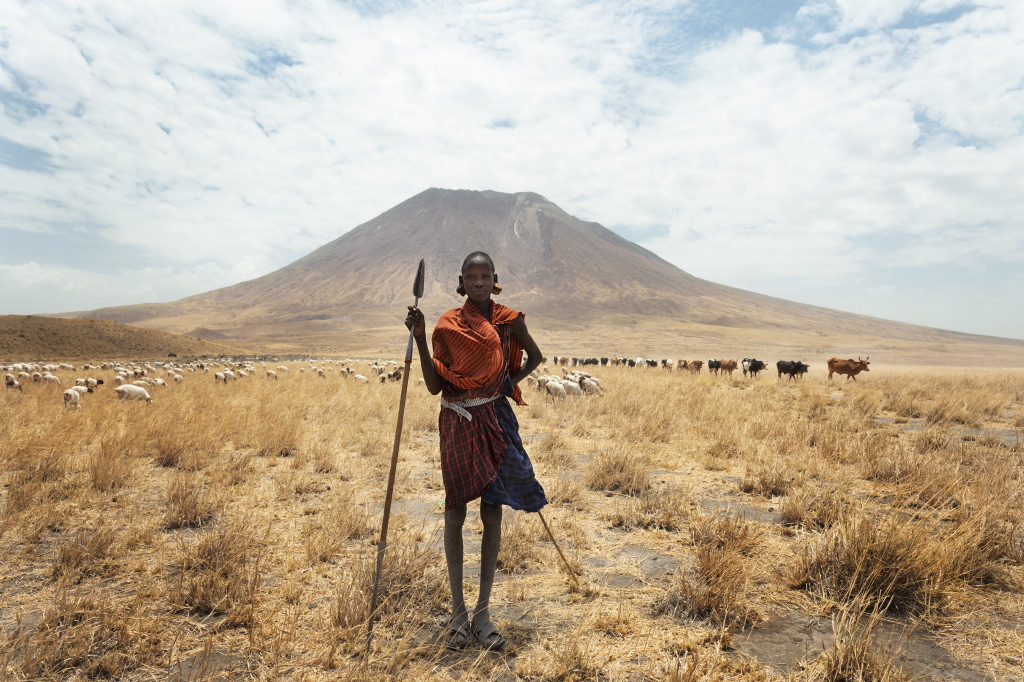
The Maasai name Ol Doinyo Lengai translates directly as “Mountain of God.” In the Maa language, ol doinyo means mountain and lengai (or le Engai) means “of God.” This is not a poetic nickname but a precise statement of belief: the volcano is regarded as the earthly home of Engai (also spelled Enkai or Ngai), the single supreme Creator in traditional Maasai religion.
The Maasai call Ol Doinyo Lengai “the Mountain of God” because it is regarded as the sacred dwelling place of their supreme deity, Engai (also spelled Enkai or Ngai).
In the Maa language spoken by the Maasai, “Ol Doinyo” means mountain and “Lengai” (or “le Engai”) means “of God,” so the name is a direct translation. Engai is the one Creator God in traditional Maasai belief—an androgynous being associated with the sky, rain, fertility, cattle, and the forces of nature. The mountain in northern Tanzania is viewed as Engai’s primordial or special abode on Earth.
Several interconnected reasons explain this belief:
- Divine residence and withdrawal myth
One traditional account holds that Engai once lived more closely among people but withdrew to the peak of Ol Doinyo Lengai after a hunter shot an arrow at him. From that height, Engai still listens to prayers and can send blessings (such as rain and healthy cattle) or hardship. cambridge.org - The mountain “speaks”
Because Ol Doinyo Lengai is an active volcano, its rumbles, tremors, eruptions, and flowing lava have long been interpreted as the voice or visible power of Engai. Thunder and lightning around the peak are also seen as signs of the god’s presence. Eruptions may be understood as messages, calls for sacrifice, expressions of anger, or acts that cleanse the land. hayadan.com - Source of life and fertility
Maasai communities have traditionally approached the mountain to pray for rain (essential for grass and cattle), children (especially for barren women), healing, leadership, and protection. Sacrifices—often unblemished lambs or cattle—are offered, and the site is treated as a place where Engai grants or withholds these gifts. researchgate.net
Engai is understood to have two complementary aspects: Engai Narok (the Black God, associated with rain, fertility, and benevolence) and Engai Nanyokie (the Red God, linked to drought, lightning, and stern justice). The living, changing nature of the volcano fits this dual character.
In short, the name reflects a deep cultural and religious conviction that this particular peak is not merely a geological feature but the earthly home of the Creator, a place where the Maasai can still communicate with the divine through prayer, ritual, and the mountain’s own dramatic activity.
Engai is understood as an androgynous deity who possesses both masculine and feminine qualities. The name itself is closely linked to the sky and to rain—the force that brings grass for cattle and life to the land. Engai created everything: the sky, the earth, people, animals, and especially cattle, which are considered a divine gift entrusted to the Maasai. The god is not distant or abstract. Engai is present in natural forces and can appear in two complementary aspects. Engai Narok, the Black God, is associated with dark rain clouds, fertility, blessing, and generosity. Engai Nanyokie, the Red God, is linked to drought, lightning, hardship, and stern justice. These are not separate beings but two faces of the same power.
According to one widely recorded tradition, Engai once lived more closely among people. After a hunter shot an arrow at the deity, Engai withdrew to the high peak of Ol Doinyo Lengai, leaving the world below marked by famine and struggle. From that summit the god continues to hear prayers and to respond—sometimes with rain and healthy herds, sometimes with scarcity or upheaval. The mountain therefore serves as the primary point of contact between the human community and the divine.
The volcano’s restless nature reinforces this understanding. Its deep rumbles, tremors, sudden eruptions, and flowing lava have long been interpreted as Engai’s own voice. Thunder and lightning near the peak are taken as signs of the god’s presence and power. When the mountain is quiet, people may approach with confidence; when it becomes active, the activity is often read as a message—sometimes a demand for sacrifice, sometimes a cleansing of the land, sometimes a warning that the community has fallen short. In this way the physical behavior of the volcano and the spiritual life of the people remain tightly bound.
Maasai communities have traditionally made journeys to the mountain or its lower slopes to pray for the things that matter most: rain for the pastures, children for barren women, healing for the sick, protection for the herds, and guidance for leaders. Sacrifices of unblemished lambs or cattle are offered. In some accounts, animals are left on the mountain overnight in the belief that Engai will accept them. Women may travel long distances, even from Kenya, to seek fertility at the sacred site. Elders and spiritual specialists known as laiboni mediate between the people and Engai, interpreting signs and conducting the necessary rites.
The mountain is therefore far more than a striking landscape feature or a geological curiosity. For the Maasai it is a living place of power where the Creator still dwells, still speaks through the earth itself, and still holds the power to give or withhold the essentials of life. The name “Mountain of God” captures that enduring relationship between people, land, and the divine.