Gear & What to Wear

Ol Doinyo Lengai is a one-night push, not a multi-day mountain expedition. You leave the Lake Natron base around midnight, climb loose ash and scree by headlamp, and are usually back down by late morning. The base can exceed 40 °C; the crater rim before sunrise is often cold and windy. Pack for that swing, plus dust and bad footing, and leave the heavy Kilimanjaro kit behind.
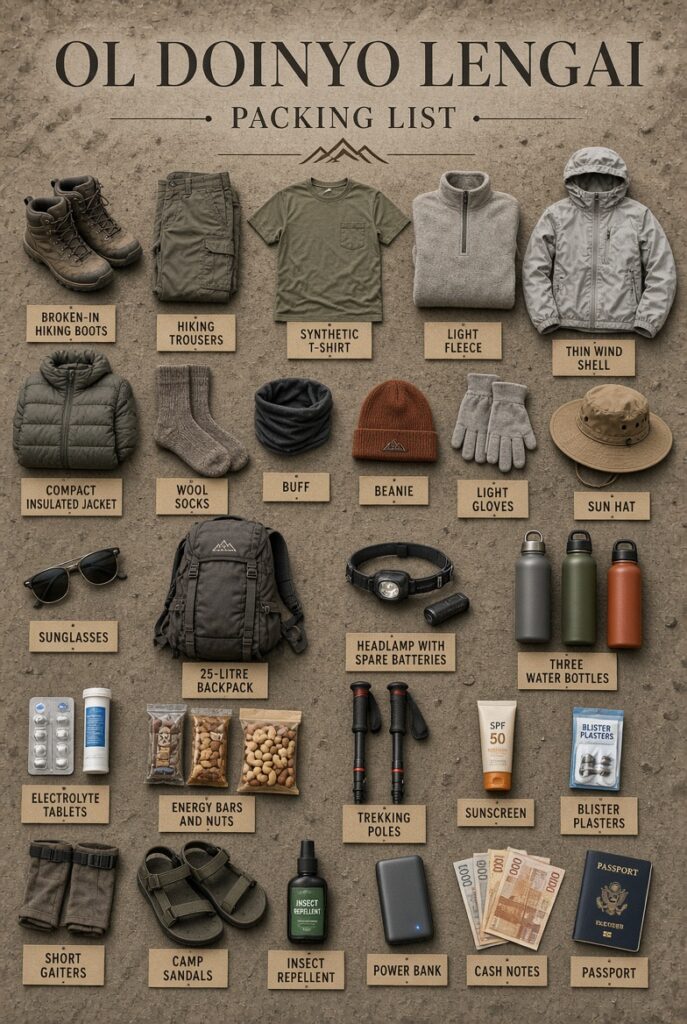
Pl Doinyo lengai packing list and what gear to wear

What to wear on the climb

Dress in layers you can peel off. Start cool enough for the lower slopes, and keep a warm layer in the pack for the rim.
Start in a light synthetic or merino T-shirt and hiking trousers. Zip-off trousers are useful so you can switch to shorts on the hot descent. Avoid cotton: it stays wet and gritty once the ash gets into it.
Add a light fleece or grid-fleece hoody for the hours before dawn. A thin wind shell or softshell over that is enough for most dry-season summits. A heavier insulated jacket is optional; a compact down or synthetic puffy is worth it if you run cold or are climbing in the cooler months (roughly June–August), when the rim can feel genuinely cold in the wind. One climber account describes the summit as cold enough that gloves and a neck warmer mattered even after sunrise.
Wear broken-in hiking boots with ankle support and an aggressive tread. The upper cone is loose volcanic ash and lava channels, and the descent is where most people slip. Low trail shoes work only if you already trust them on scree; if you use them, add short gaiters so ash stays out of the collar. Take a spare pair of socks in the pack.
A buff or light neck gaiter keeps dust out of your nose and mouth. A warm beanie and light gloves cover the pre-dawn rim; a sun hat with a brim replaces the beanie once the sun is up. Sunglasses are for the descent, not the night climb.

What to wear to the summit of Ol Doinyo Lengai

Climb-day pack

Keep this light. You carry it the whole way, and there is no water on the route.
– Headlamp with a fresh battery, plus a small backup light or spare cells. A phone torch is not enough for five or six hours of steep ground.
– 3–4 litres of water. Two bottles or a bladder plus one bottle is easier to manage than a single soft reservoir. Add electrolyte tablets; the dry air and the hot walk down dehydrate faster than the night climb suggests.
– Snacks you can eat while moving: nuts, bars, dried fruit, a sandwich. Appetite often drops near the top.
– Trekking poles. They save the knees on the way down and help on the loose upper slopes. A local stick from the guide is a workable substitute.
– Light fleece, wind shell, beanie, and gloves, if you are not already wearing them.
– Sunscreen, lip balm, and the sun hat, stowed until dawn.
– Small personal first-aid items: blister plasters, any personal medication, and a basic painkiller. Tell your guide about anything you might need help with.
– Lightweight gloves you do not mind ruining, if you expect to use your hands on the last rocky section.
– Optional: short gaiters, a spare buff, and a small rubbish bag. Pack out wrappers.

A 20–30 litre pack is plenty. Rain trousers and a light shell are worth carrying in the wetter months (around November–December and March–May), when ash turns slick. In the dry season a shell is still useful as a wind layer.

What to wear to the summit of Ol Doinyo Lengai

At camp, before and after

The drive from Arusha is long and dusty, and you will want a shower and sleep after the descent.
Camp sandals or light shoes for the lodge.
Sleep clothes and a warm layer for the evening; nights at Natron can feel cool after the heat of the day.
Toiletries, quick-dry towel, and any malaria precautions your clinician recommended for the region.
Cash in small Tanzanian notes for tips and local fees.
Passport, insurance details, and any permits your operator handles.
Power bank. Charging is unreliable at simple camps.
Insect repellent for the evening at the lake.

Book Your Ol Doinyo Lengai Trek!

Or

Call: +255747541280

Scroll to Top